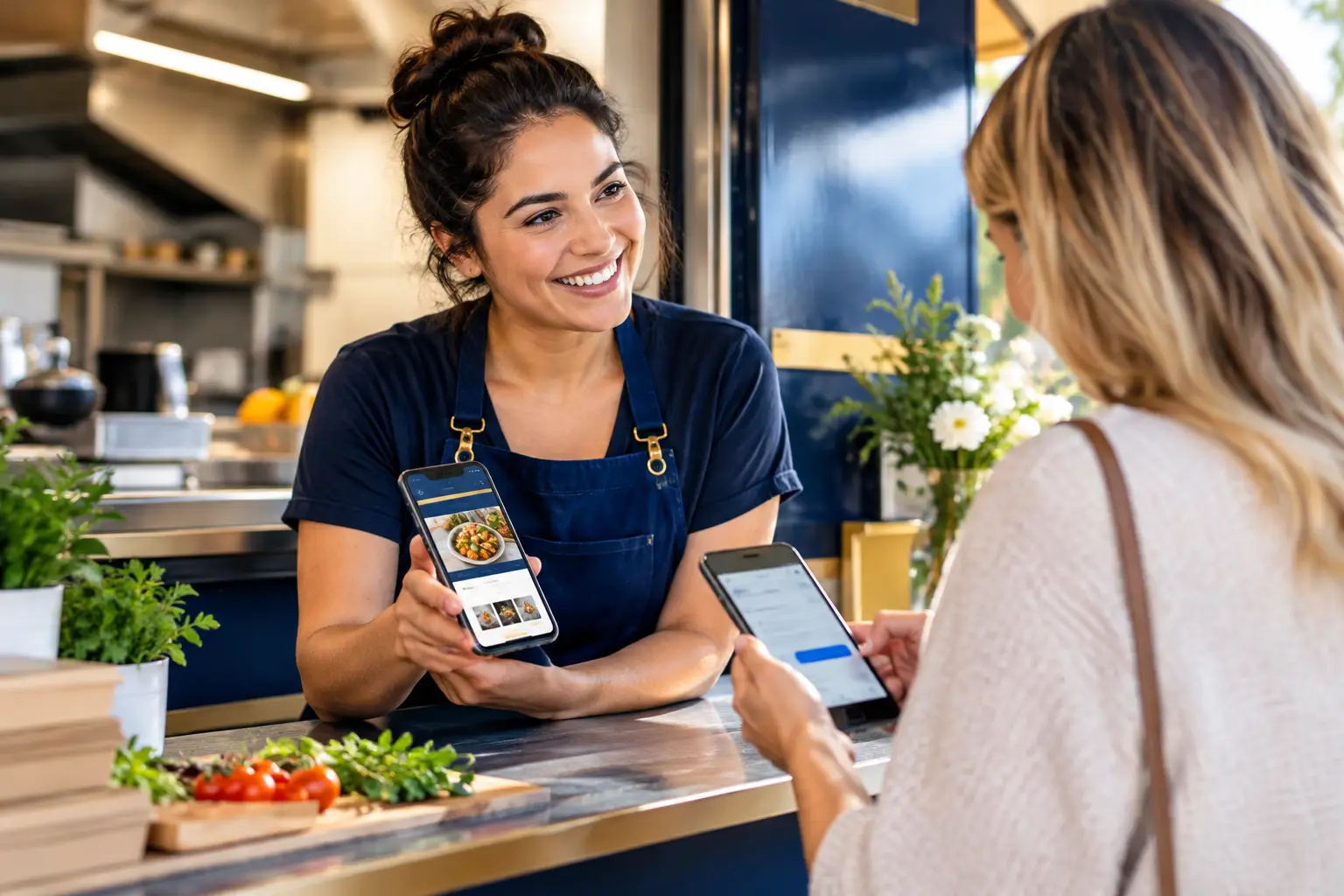
A customer reaches out while you are with someone else. They call, send a text, use chat, or fill out a form. Then they wait. That wait is your speed to lead.
Speed to lead means how fast you answer a person who wants help. For a local business, it is not a small detail. It is often the gap between a new booking and a customer who calls the next business.
Your team may do great work. Your ads may bring people to your site. But none of that helps if the person who reaches out gets no answer.
What speed to lead really means
Most owners think about speed to lead as a phone issue. It is bigger than that.
A customer may call from a parking lot. They may text while at work. They may use the chat box late at night. They may fill out a form when they do not want to talk yet.
Each person wants a clear next step. They want to know that a real business saw them. They want to ask a basic question. They may want to pick a time and get booked.
If your site only collects a name and phone number, the person still has to wait. If the team is busy, that wait can last hours. If it happens after closing time, it can last until the next day.
That is not a problem with your work. It is a problem at the front of your business.
The first answer sets the tone
A fast answer does not need to be long. In fact, it should not be.
A person who needs a party rental may want to know if a date is open. A person looking for a painter may want to explain the job. Someone who needs a car detailed may want a time slot. They do not want to search through a site or wait for a reply that may not come.
The first answer should make the next step easy. It should ask what is needed, gather the right facts, and help the person book.
This is why a plain contact form often falls short. A form can take a message. It cannot help the customer while they are still on your site. It cannot answer a text sent at 9:30 at night. It cannot reply to a missed call.
A good front end does all three.
Why good people still miss customers
Missed customers are not always caused by poor service. Most are caused by a busy day.
The owner is on a job. The front desk is helping someone in person. A staff member is driving. The phone rings during lunch. A text comes in after hours. A web form lands in an inbox no one checks until morning.
No one meant to ignore the customer. But the customer does not see it that way. They only know they reached out and did not hear back.
Then they try another business.
This is hard for owners because the lost customer is quiet. There is no alert that says, "You just lost this booking." The phone simply stops ringing. The form sits in the inbox. The person hires someone else.
That is why looking only at call volume or web visits can mislead you. The better question is simple. When a person reaches out, what happens next?
Your website should answer and book
A website should do more than show photos and list services. It should help customers when your team cannot answer.
The 7-Day Never-Miss-A-Customer Site is built for that job. It is the front of your business. It handles the website, chat, texts, and booking in one place.
When someone calls and no one can answer, it texts back. When someone uses chat, the assistant on your site answers in under a minute, day or night. When a person is ready, it helps move them toward a booking.
The site can work in English and Spanish. That matters when a customer is most at ease asking questions in Spanish. They should not have to wait for the right person to come in the next day.
This does not mean every question has one simple answer. Some jobs need a closer look. Some bookings depend on a team member, a date, or the type of work. The site can gather what you need and set the right next step.
The point is not to replace good judgment. The point is to make sure the customer gets a response before they move on.
Fast is useful only when it is clear
A quick reply that confuses a customer does not help much. Nor does a long reply that reads like a brochure.
The best first response is plain. It uses the same words your customers use. It asks one useful question at a time. It gives the person a clear way to book, call, or share details.
This is where many sites go wrong. They put all the work on the customer. The customer has to find the right page, guess what to do, and wait after filling out a form.
We build the site around the way people actually reach out. Then we keep it running. Hosting, changes, support, and new features stay with our team. You do not have to chase a web designer each time a price, service, photo, or booking need changes.
NLG built this service after closing sales for business owners. That is why the site is built to book customers, not just look good.
The phone test tells the truth
Owners often feel their site works because it looks fine on a screen. But a customer sees it another way.
They may find it on a phone. They may need an answer fast. They may not read every page. They may call, get no answer, and decide whether to try again.
That is why the phone test matters. Call your own business after hours. Send a text as if you were a new customer. Use the chat. Fill out a form. See how long it takes to get a helpful response.
Do the same on a phone and a computer. Check if booking is easy. Check if the words make sense. Check if Spanish-speaking customers can get help.
You may find that your site gets attention but does not catch it. That is a fixable problem.
A site that keeps working
A site is not finished on the day it goes live. Your business changes. Your hours may change. You may add a service, new photos, or a new way to book.
A site that sits untouched can slowly stop helping. Old details make customers pause. Broken forms make them leave. A missed call with no text back gives them no reason to stay.
Our team stays with the site after it is built. Missed calls get a text back once the phone carriers approve your number. A review request goes out after every job. The owner owns the website and domain.
We also give one clear promise. Send your logo, photos, and prices, and the site is live in seven days. If it is not, the build fee comes back.
That speed matters because a business should not have to wait months to stop missing people who are ready to book.
Look at the gap before you buy more ads
More ads can bring more calls, texts, chats, and forms. But if those people do not get a fast answer, more traffic can mean more missed chances.
First, look at what happens after a person reaches out. Measure the wait. Read the first reply. Try the booking path yourself.
Then fix the front of the business.
One client brought in $386,000 in 26 days. Another brought in $180,000 in 28 days. Those are proof points from real work, not a promise about what any business will make. Every business has its own needs, hours, and customer mix.
Still, the rule is plain. A customer who reaches out should not be left alone with a silent website.
Ask for our free website check. We will check your site on a phone and a computer next to your top three local competitors, text your business like a new customer to time the answer, and walk you through what we find. It is free, with no obligation. You can also call or text 409-419-4120 to hear it answer.